The Problem:
Representing Work with Play
Every decade-themed section of The Ladder has its own set of three scored games. These games exist alongside each decade’s escape-room-style puzzle track, allowing The Ladder to cater to a larger audience by providing entertainment and reward for those choosing not to engage with difficult puzzles.
In the previous decades up to this point – the 50s, 60s, and 70s – the games had been physical, tactile experiences. For the 1980s, we had something different in mind: we wanted to embrace the digital world by dropping players into a neon wonderland of beautiful, chunky, pixel-y arcade games.
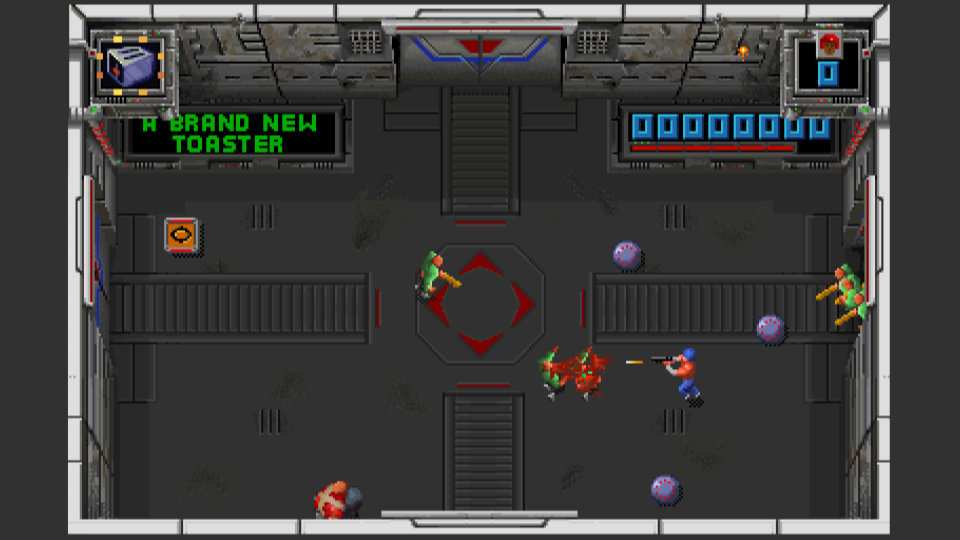
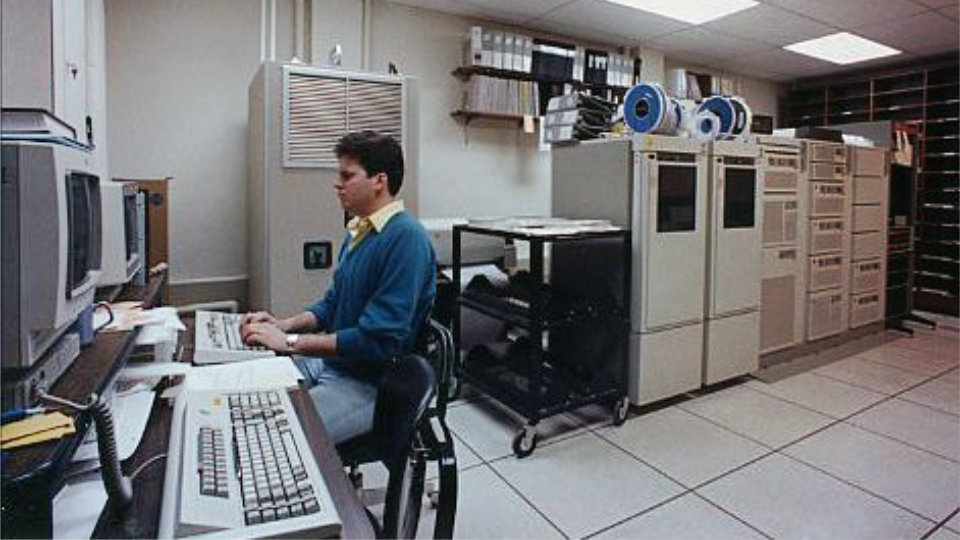
This idea was incredibly exciting for all of us. It also presented a ludonarrative headache. Everything in The Ladder helps tell a story of corporate ambition, testing your moral compass as you rise the ranks of a pharmaceutical company, and the scored games in the experience represent you actually doing your job at the company. So our neon arcade wonderland had to also serve as a parallel to this:
The Solution:
Develop Nutricorp-Themed
Games From Scratch
Naturally.
Our games, in whatever shape they would eventually take, would need to satisfy several conditions to serve their purpose within The Ladder properly. After a good bit of deliberating, we decided that these conditions would be as follows:
- There should be a single-player game, a two-player game, and a four-player game.
- The games should all be based directly on existing classic arcade titles. (Fun ones, too, they clarified, which led to me discovering that not everyone loves Asteroids the way I do.)
- The games should have Nutricorp-themed premises.
- The games should each directly call back to one of the three previous sections of The Ladder – the 50s, 60s, or 70s.
- The games should each deliver about three minutes of novel gameplay. (The full decade spans around ten minutes.)
The Process
Concept Development
Concepting for the three games took several meetings and lots of back-and-forth. There had been initial spitballed ideas written into The Ladder’s script early on, and one of them did make it all the way to the finish line, but the other two were ditched quickly.
I eventually delivered these three concepts and got their approval:
- Bossy Kong: A pretty direct clone of Donkey Kong, and the only one of the three to be drawn from the original script. Your character is a lowly Nutricorp employee, your boss is throwing stacks of paper down at you to process by day’s end, and you’re trying desperately to dodge your duties (literally) and make it to Douchie’s Bar & Grill for an after-work pint.
- JavaBot 3000: A twin-stick shooter in the vein of Smash TV. Two-player, very loosely, in that two people can opt to control the character together with one operating each joystick. You are a Nutricorp barista armed with a highly-advanced coffee machine, and your goal is to shoot coffee at the horde of caffeine-addicted office zombies before they overtake you.

- Mail Room Mayhem: A four-player sidescrolling beat-em-up a la TMNT, X-Men or Final Fight. You are four incredibly buff mailroom workers who have to stop Nutricorp’s rival company, VitaMind, from stealing the precious Vitamin X.
These concepts satisfied the condition of tying back to previous decades.
- Mail Room Mayhem takes place in the mailroom from the 1950s.
- JavaBot 3000 re-imagines a coffee delivery machine featured in the 1960s.
- Bossy Kong’s end-of-level goal, Douchie’s, is a location represented in the 1970s.
Honestly, I took this on personally with a decent amount of confidence and more than a little excitement. I’d spent too much of my childhood trying to make computer games in my room to let an opportunity to do it semi-professionally pass me by. I had not, however, built a game in Unity before, so I would need to learn many aspects of the process as I went.
Building Bossy Kong
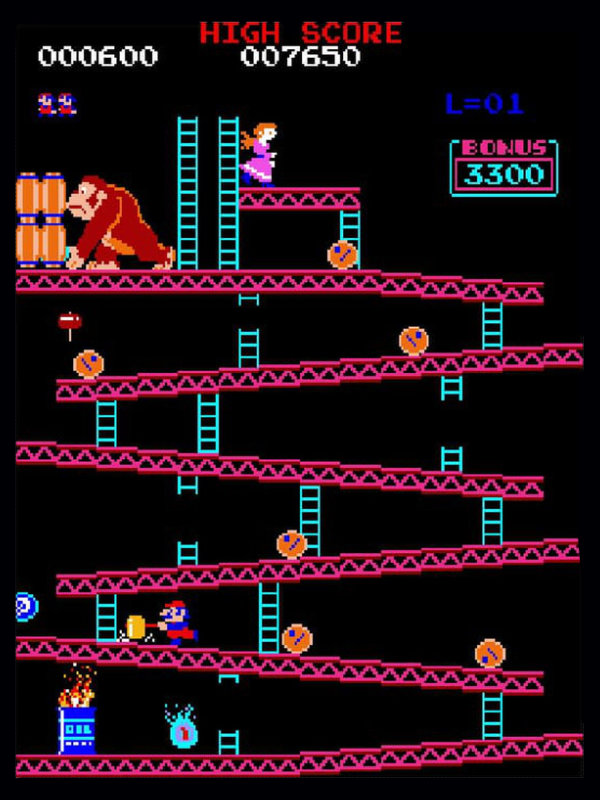
Watching a playthrough of the original Donkey Kong arcade cabinet, you might notice some subtle facets of the game design that helped it become such a classic. For example, when you start the level at the bottom of the screen, Donkey Kong's barrels fall through several floors before starting to roll along, so they can reach you and pose a threat faster. Then, when you jump over barrels successfully, they don't continue looping down the floors but instead fly off-screen as soon as they can – which allows DK to roll more barrels at you without hitting the game's limit on barrels on screen at a time. You might think these details are unnecessary, and at first, so did I. But when I tried skipping them in my version of the game, it felt unbalanced and broken.
In keeping with the 3-minute guideline, I created Bossy Kong as a 2-level mini experience.
The first level is a pretty straight re-creation of the original:

In addition to the stacks of paper playing the role of rolling barrels, you’ll notice that the original game’s iconic hammer was not forgotten. The hammer is a temporary power-up item that functions similarly to Pac-Man’s Power Pellet, giving you a few moments of sweet retribution as you smack your normally-invincible enemies into oblivion.
Here’s a fun design riddle for you: if this game’s conceit is that you’re trying to “dodge your duties” as a mundane office employee, then what could the hammer represent?
My answer to this was to re-brand it as the Procrastination Hammer.

The second level adds a couple of twists to the formula:

The pink phone acts kinda like the spring-like Jack from DK, but not quite. The white machine in the lower corner is a paper shredder, and the yellow-ish stacks of paper are identical to the white ones except that they’re too thick for the shredder to handle; the ensuing paper jam shoots dangerous little shred-bullets all over the screen.


Of course, failure to perform is met with smug admonition from the man himself:
Building JavaBot 3000



JavaBot 3000 is what’s called a twin-stick shooter. In this classic genre, you see your character and the world around you in a top-down view. The eponymous twin sticks are used for moving and shooting, respectively, in any direction. The rest of the game’s design will then play off of those two mechanics: the ability to shoot in any direction is tested by having large amounts of enemies swarming the player from all sides at once, and movement around the level is encouraged by dropping gun upgrades and power-ups.
A funny thing happened early on in developing the concept for JavaBot 3000. I had pitched the idea to Ladder co-director Tommy Wallach as a game starring a man wielding a high-tech coffee machine. However, he misinterpreted the pitch, thinking instead that the game would star the JavaBot 3000: a sentient, high-tech coffee machine. This was an enormous improvement, and I started sketching ideas for the character immediately.
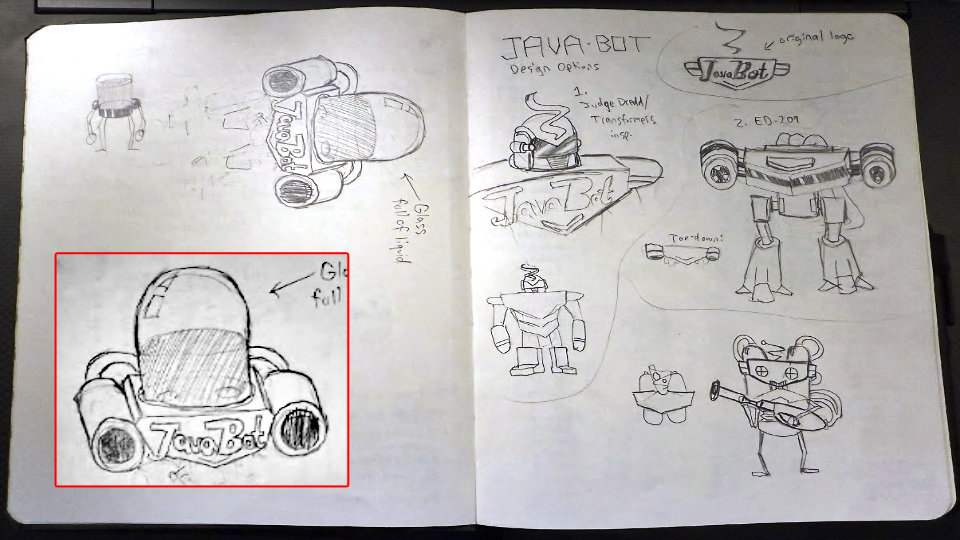

The dome-headed design was my favorite. My original idea for the gameplay was that zombies, or rather the coffee-deprived employees, wouldn’t be outright malicious but would instead squeeze you to death in their desparate need for caffeine. I wanted to sell this idea further by giving the character a fragile element, with all his coffee held in a glass chamber.
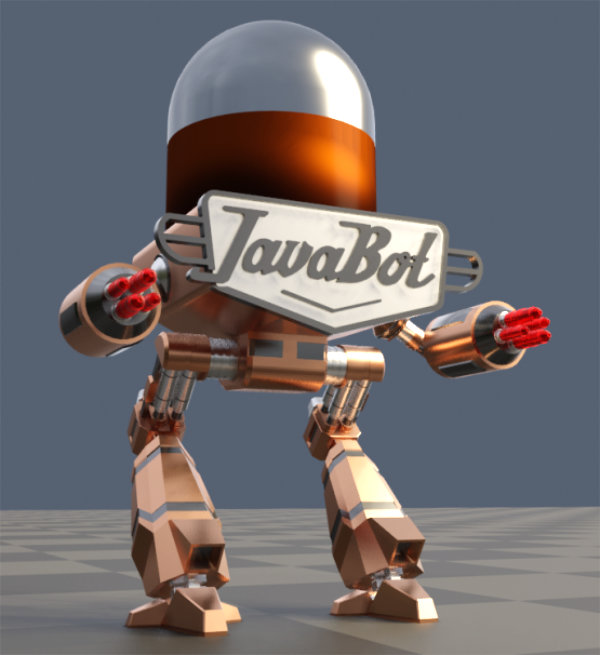
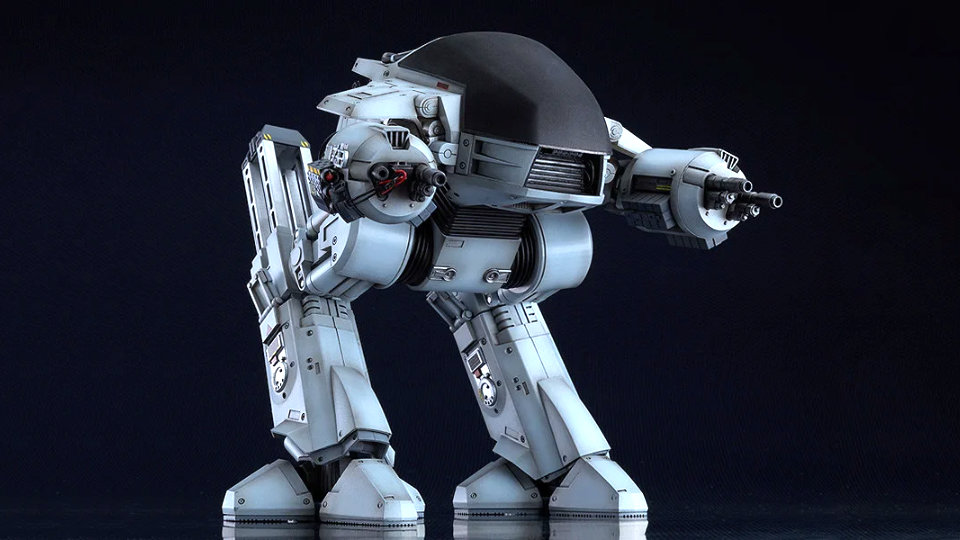
I then created this 3D concept render in Blender. The JavaBot logo had already been designed, and everything else besides the dome belonged to a free online model I found of the villainous ED-209 mech from RoboCop.
I would eventually re-use this render, passed through a pixel art filter in Photoshop, to create the game’s title splash screen:
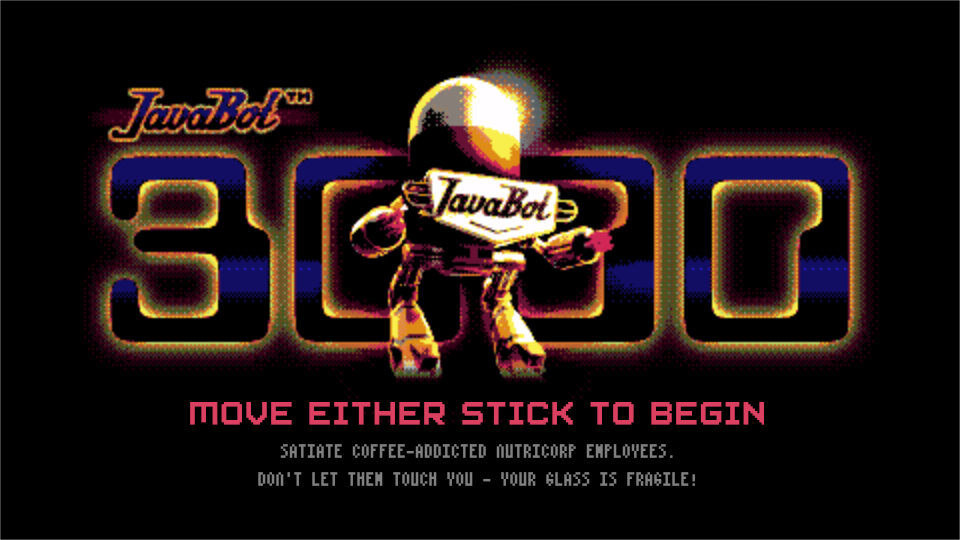
While I had made the pixel art for Bossy Kong myself (and I use “made” very loosely here), JavaBot 3000 was the beginning of my work directing and working alongside pixel artist JDZombi. He brought a wonderful and professional spirit to the project and created some gorgeous art assets for this game and the next one.
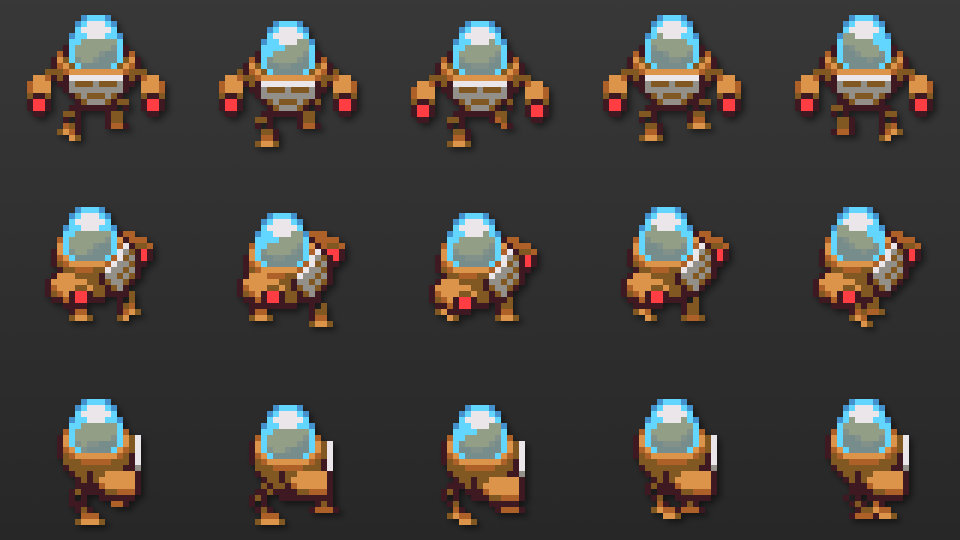
The simple top-down shooter gameplay of Smash TV made for an instantly fun game. My earlier concept of being “crushed by the mob” was eventually ditched after feedback in favor of a more straightforward style of one-hit-kill gameplay. While I am curious how my original design would have panned out, the simpler approach was more foolproof and allowed the focus to be on the wacky guns and power-ups.
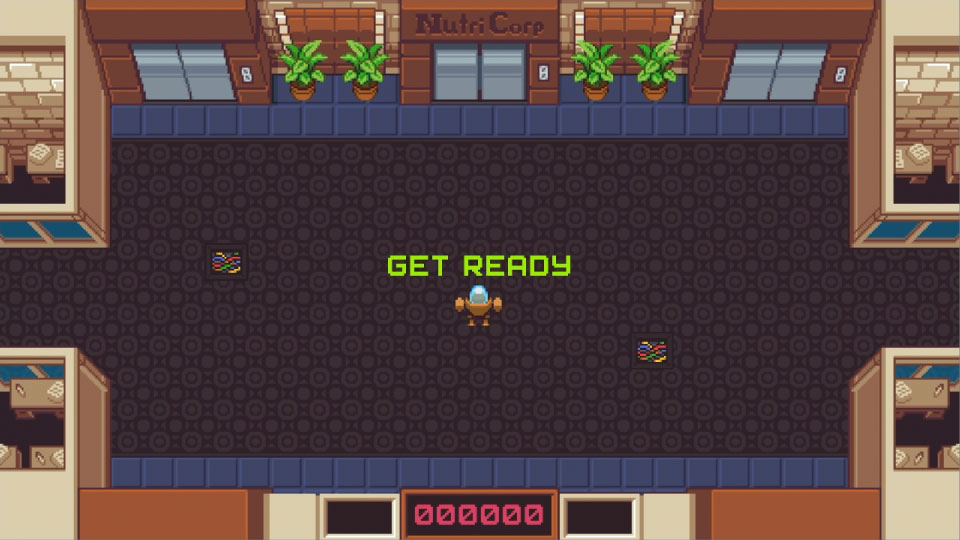
I thought it’d be fun to give the JavaBot his own robotic voice as well, so he could drop one-liners at the beginning of levels:
And upon death:
Of these three games, I think I enjoyed making JavaBot 3000 the most. It mostly had the benefit of timing: I had the experience of a game under my belt already, and we weren’t in crunch-time yet, so I had the luxury of time to experiment and add all sorts of fun stuff.
Oh, and there is a final boss in this game that I’m pretty proud of. I’m not including it here because I think it might need another post with a spoiler tag.
Building Mail Room Mayhem
I was grateful for my experience building the last two games when it finally came time to build Mail Room Mayhem, a game that would feature four playable characters together on-screen and enemies with advanced AI.
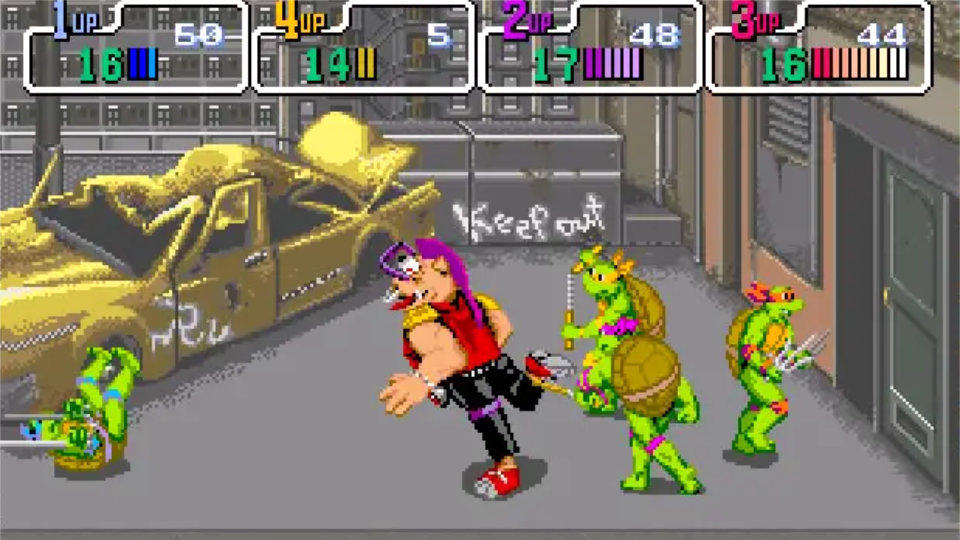
Unfortunately, in an all-too-familiar turn of events, time was starting to become an issue by the time I was able to work on this third game. I’d been pulled onto various other Ladder projects in the time since I’d finished the last one, and the opening date was approaching. My goal became delivering Mail Room Mayhem as a solid MVP, a minimally-viable product that could still provide players with a really fun time and hold up as a worthy companion to the other two games.
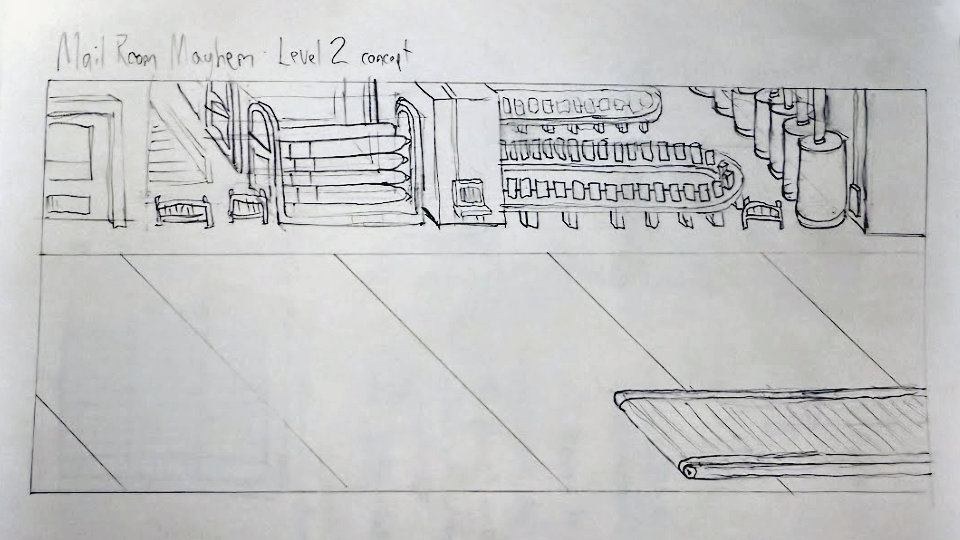
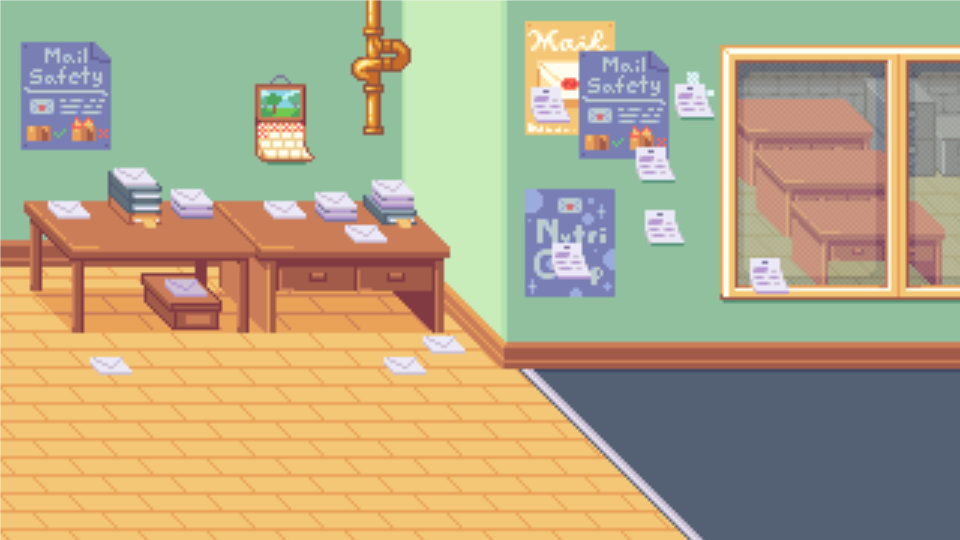
The bare-bones mechanics of the game (read: punch, get punched, punch until enemy falls, repeat) was very fun to make. I ended up programming the enemies to behave more or less like enemy thugs in a cheesy martial arts movie: huddled around the main characters at all times, looking threatening, but politely waiting their turn to engage one or two at a time.


A little while after The Ladder opened to the public, I was happy to get the chance to work on Mail Room Mayhem a little more. I added in a sorely-needed second enemy, a deadly ninja type with a mean flying kick.

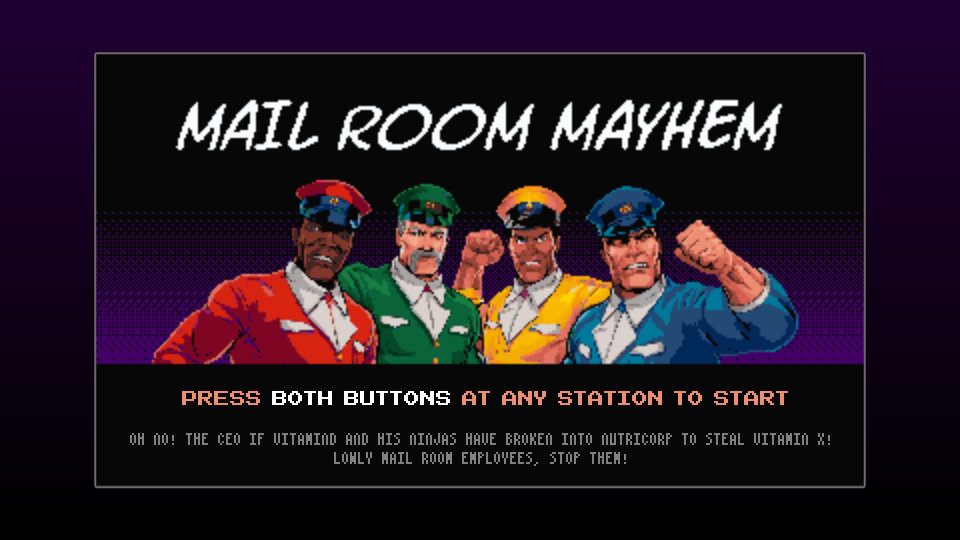
For the game’s title screen, as with JavaBot 3000’s, I wanted to take the chance to introduce the playable characters in full detail. But while the JavaBot character already had a full render available, my four action-hero mailmen only existed as text descriptions before being brought to life by JD. I’m not much of a character illustrator myself, and the task didn’t warrant hiring another artist, so it was time to consider an AI-based approach.
My opinion of generative AI as of this writing, subject to change, is that it’s a fantastic tool for creating filler. I love using ChatGPT or Claude for generating large amounts of convincing-but-unimportant text, such as lists of names for a fake phonebook or pages in a fake diary. And while I rarely use generative art tools like MidJourney or StableDiffusion, I’ll occasionally try them out for similar use cases like generating lots of photos for a newspaper or creating vintage poster to hang in the background of a shot. (I’m also a huge fan of people using them to create art that would be next-to-impossible otherwise, like these illusions.)
I almost never want to use these tools for anything you’d pay attention to. In this specific case, however, I was willing to give it a go. I knew that the game’s comic-book aesthetic would save the result from falling into that dreaded tell-tale “AI style”, and perhaps more importantly, I knew my pixel-filter process would obscure a lot of the quirks. The final result is something I’m surprisingly happy with, and I’m glad I made the decision to do it – the game is better for having it.
The Final Result
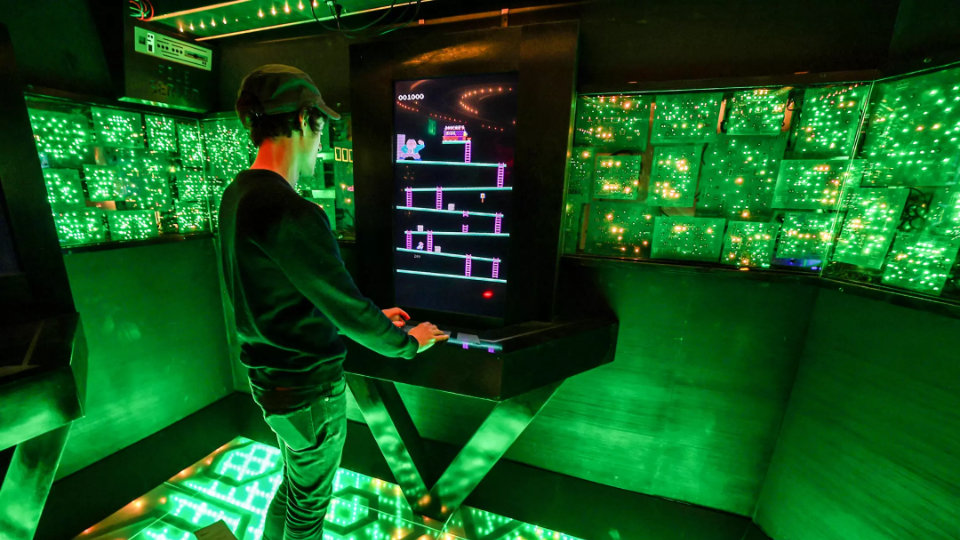
The development of our custom arcade games was overall a fun challenge, and it led to three final products that I’m incredibly proud of. While none of them came out perfect, they all got done, and in daily operation they’ve proven themselves as fun experiences and worthy additions to The Ladder.
I’m also grateful for how much of these games were allowed to be “me”. While the games were built within the world of The Ladder and have mechanics based on pre-existing games, I was also able to express myself heavily in their designs. Deep in the DNA of JavaBot 3000 and Mail Room Mayhem, in particular, you’ll find my favorite games and movies and a good helping of my own weird brain. In collaborative projects like these, with large teams and predefined scripts, I think it’s rare to be afforded this kind of opportunity, and I relished it.


